
Trash Fish
Calling native fish “trash,” “junk or “rough” says nothing about them and lots about us.

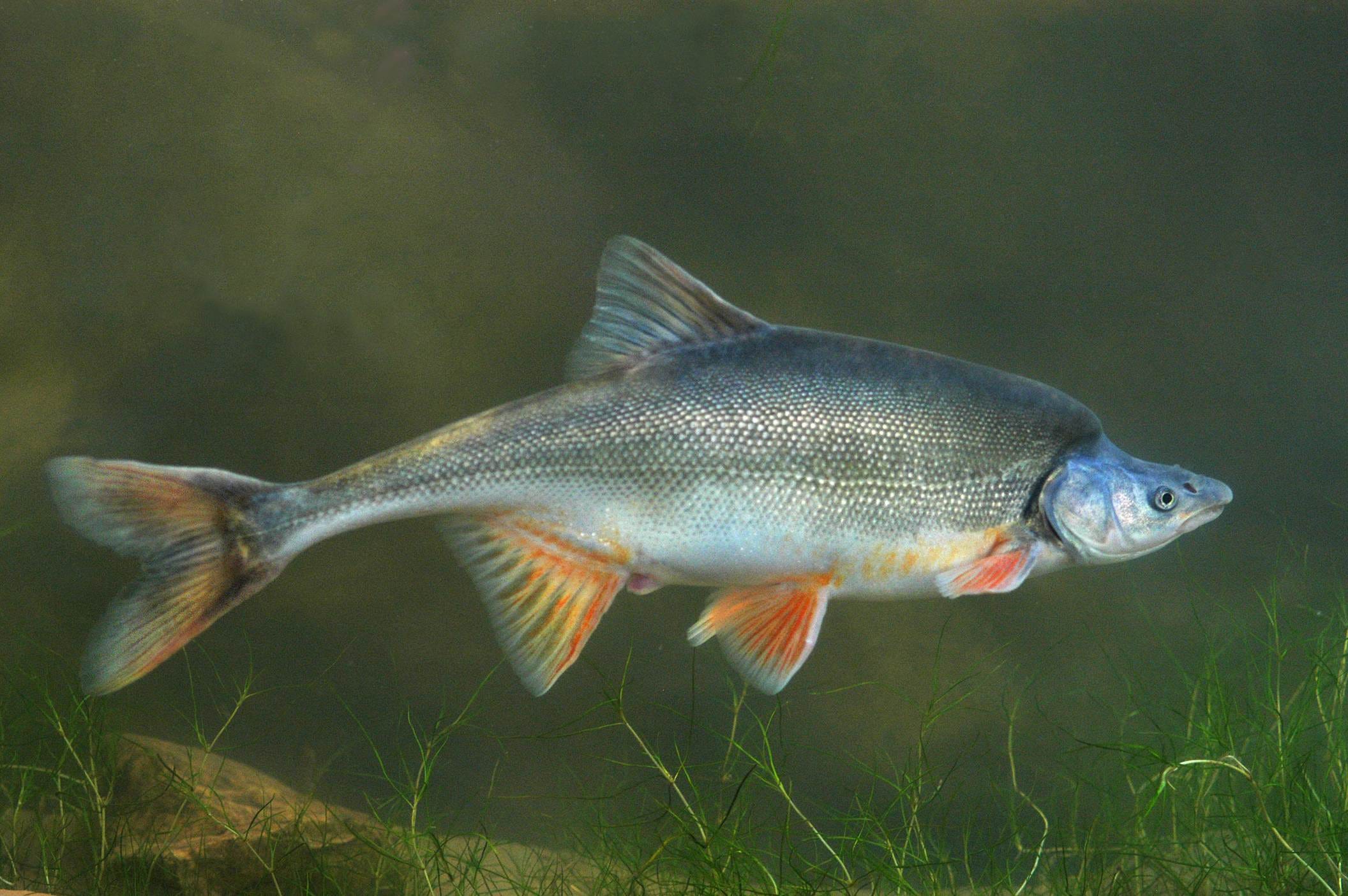
Humpback Chubs. Courtesy of Arizona Game and Fish Department
There are desirable species and undesirable species. Chubs, for example, are undesirable -- “trash fish.” They eat bugs favored by desirable fish like rainbow and brown trout stocked in the East, and they steal your bait. Chubs should be squeezed and tossed into the bushes. This was the early lesson taught me by my elders.
It took me years to unlearn it. These chubs (fallfish) are natives -- beautiful, silver Cyprinidae washed with copper. Unlike non-native hatchery trout, they’re vital parts of coldwater ecosystems. Thoreau fished for them in Maine, extolling them as “cupreous dolphin.” w
Since my childhood tutelage, the angling and management communities have made scant progress. Still generally considered “trash fish” by both camps are native species like gars, bowfins, redhorse suckers, buffalofish, carpsuckers and saltwater rays, to mention just a few.
These natives tend to be long-lived. So, unlike what are termed “gamefish,” which tend to be short-lived, they don’t compensate for mortality with frequent recruitment. The bigmouth buffalo, which can attain 50 pounds, is the longest-lived freshwater fish in North America. The otoliths of one revealed its age at 127 years. Alligator gars can live at least 60 years, smallmouth buffalo, black buffalo, quillback river carpsuckers and silver redhorse 40 or more, bowfins for 33, cownose rays for 20.
Native “trash fish” -- “rough fish” and “junk fish,” as they’re also called -- are essential cogs in a complicated machine the management establishment doesn’t begin to understand. They provide forage for birds, mammals, reptiles, amphibians and fish, including gamefish. They preserve aquatic and terrestrial productivity by recycling nutrients. And they host larvae of native mussels, some endangered, and all essential cogs in the same machine.
Yet most states lump ecologically disruptive aliens like carps, snakeheads, and invasive lionfish with nongame natives. The Sportfish Restoration Program funds management of native and non-native gamefish. But nongame natives are orphans.
Bag limits and closed seasons for these natives are often nonexistent, and because the natives don’t spawn as frequently as gamefish, they can’t tolerate much human exploitation. Most are declining, and the main cause is the fast-growing sport of bowfishing. The only thing wrong with bowfishing is that it’s essentially unregulated.
Another chub, native to the Colorado River system, is the humpback. It’s been heavily exploited, too, though not by bowfishers. In 1962, as the Bureau of Reclamation prepared to close the gates on the Flaming Gorge Dam and impound 91 miles of the upper Green River in Colorado, Utah and Wyoming, state and federal managers decided that humpback chubs (along with other undesirable natives) had to go to make way for non-native trout. So, with no data, they poisoned 445 miles of the Green River and its tributaries with rotenone. As one angler told the Fish and Wildlife Service years later, “Everybody was tickled to death. There was so much chub and trash fish, [but] there was no trout.”
In 1963, the Glen Canyon dam on the mainstem Colorado converted warm, turbid humpback-chub habitat to cold, clear tailwater in the 15-mile Lees Ferry reach. Managers promptly stocked non-native brown and rainbow trout, which chowed down on the humpbacks. Trout, rotenone, and both dams rendered the humpback chub among the first species listed as endangered under the 1967 Endangered Species Act. The toothier 1973 version required the National Park Service to undertake trout control (not eradication).
Anglers and guides were apoplectic. “We cannot go back to the Garden of Eden,” proclaimed the Colorado Fishing Federation in an “action alert” entitled “Endangered Species Threaten Sportfishing.” “Millions of sportsmen’s dollars are used on endangered species protection. This is a fact short-sighted, narrow-minded environmentalists never seem to consider.” Typical of irate posts on fishing forums was: “[They] want to kill this trophy river in favor of rough fish.”
Today, the Park Service still controls trout. It has a weir on Bright Angel Creek, the main spawning tributary and kills gravid browns attempting to run upstream. It has also created a brown-trout bounty, verbally sanitized as an “incentivized harvest program.” (It doesn’t work, according to the Arizona Game and Fish Department.) Now that humpbacks are doing better because of low, warm water from Lake Powell, the more popular and less predatory rainbows are left alone.
You have to wade through reams of recent angler comments to unearth hints of enlightenment. This from “Dave” on the Trout Unlimited Facebook page: “I watched the Bureau of Reclamation, at the urging of one environmental organization, destroy Lees Ferry, a world-class trout fishery in a misguided attempt to restore the humpback chub… Now I simply wish the humpback chub to go quietly into extinction.”
TU management, on the other hand, has never opposed trout control on the Colorado. When Charles Gauvin was directing TU, he told me this: “If we fight this, what will we say to Walleyes Unlimited when they complain about some coho recovery program in Oregon? Let’s grow up. This is a problem we have to live with in these altered habitats where trout are a mitigation species. If the science is good, what business have we to be complaining about efforts to save a native species?”
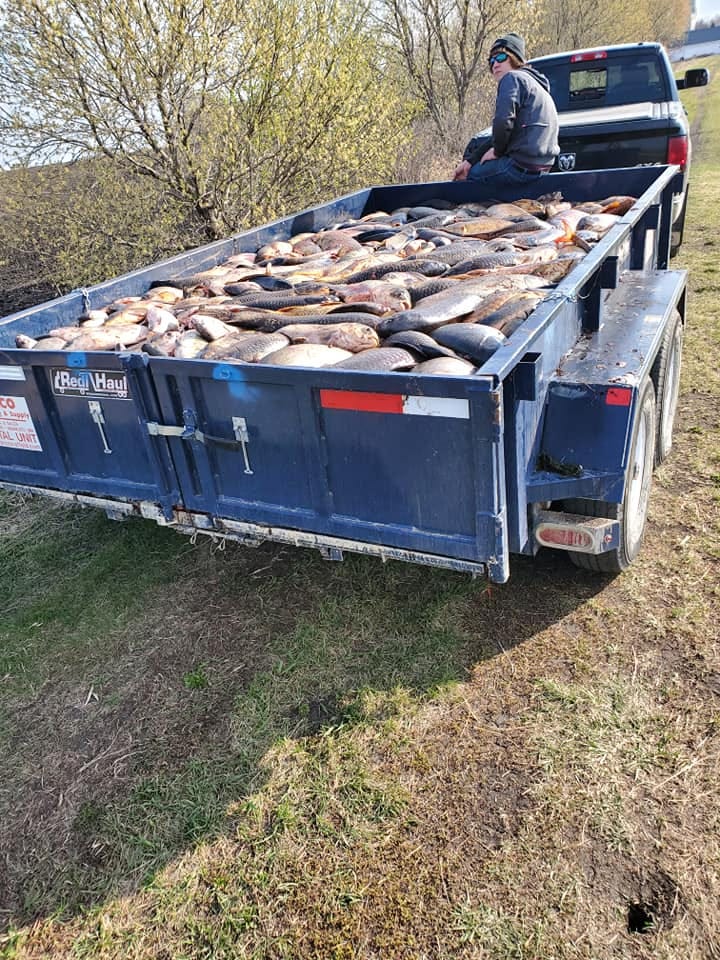
Trailer full of bow-shot buffalo fish.
In 2022, the Izaak Walton League petitioned the Minnesota Department of Natural Resources for “Adoption of Rules to Protect Minnesota’s Native ‘Rough Fish’”: “Unfortunately,” it wrote, “all native rough fish suffer from inadequate legal protection; many have a continuous open season, with no limits. The ‘precautionary principle’ states, ‘Where there are threats of serious or irreversible damage, lack of full scientific certainty shall not be used as a reason for postponing cost-effective measures to prevent environmental degradation.’” At least in Minnesota, activism by the League and other native-fish advocates has resulted in two pieces of needed legislation.
When spearfishermen proudly posted a YouTube video of 90 shortnose gars they’d killed and left on the ice, these activists prevailed on Minnesota lawmakers to hatch the “Gar Bill.” This set a 10-fish limit on the state’s gars (shortnose and longnose) beginning in 2023. Then the legislature enacted the “No Junk Fish Bill,” which requires the DNR to manage native nongame fish separately from non-natives and earmarks funds for a nongame native fish biologist.
All the research and native-fish advocacy in Minnesota rendered it the one state from which I was able to attain decent data. Minnesota is among the very few states where reform is in the works. But at this writing, the DNR has yet to impose limits on drum, smallmouth buffalo, bigmouth buffalo and black buffalo. All three buffalos are valued food fishes in the Mississippi drainage, and the black buffalo is listed as a “Special Concern Species.”
The vast majority of native fish killed by bowfishers in the U.S. are left to rot. “They lay them out on the road, take photos, then pitch them into the ditch,” says Tyler Winter, co-founder of Native Fish for Tomorrow. It’s nothing for an experienced archer to kill a couple hundred bigmouth buffalo a night. They start at ten pounds. If you kill 50, you’re not eating them. That’s a year’s worth of food.”
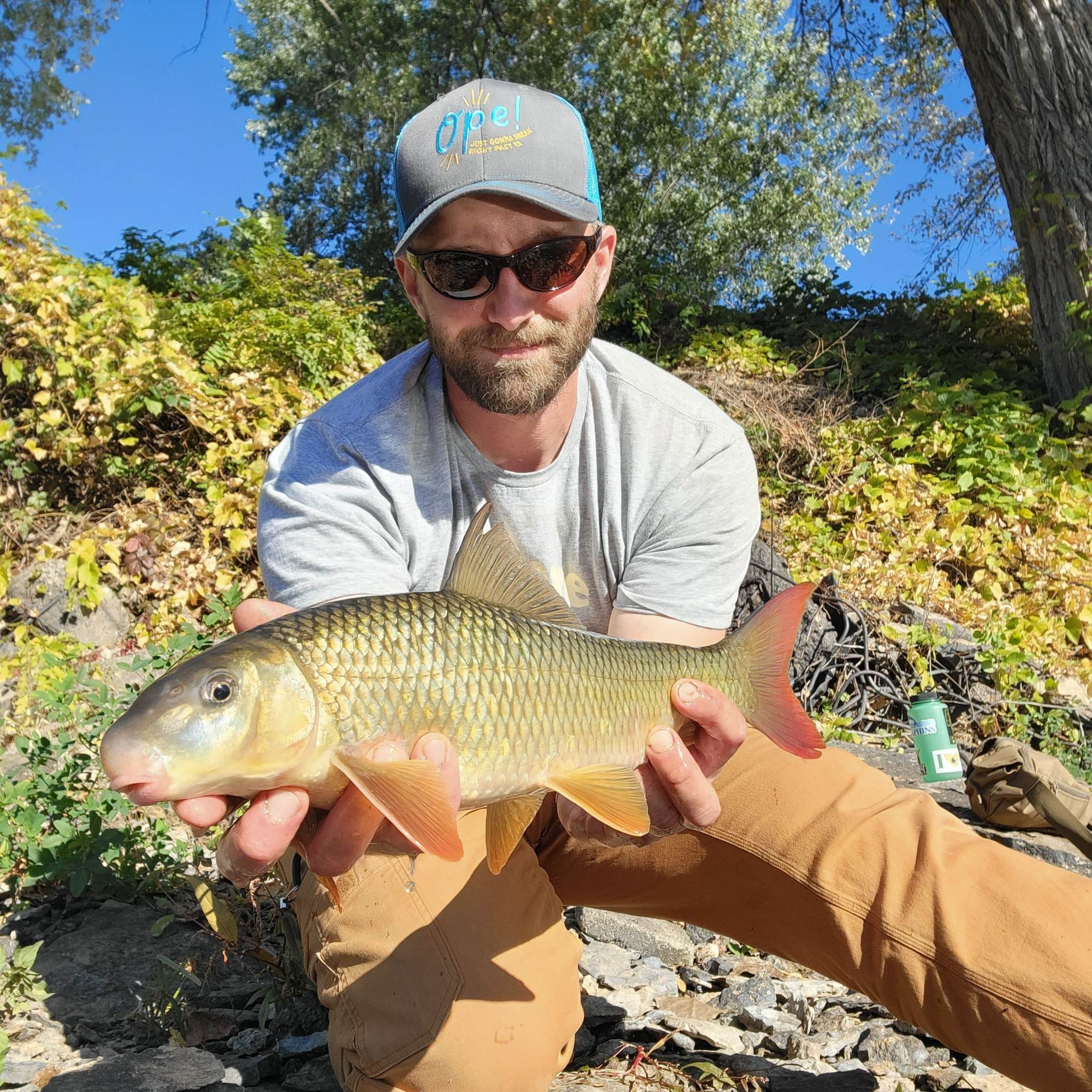
Tyler Winter with shorthead redhorse caught on a worm. Photo by Tyler Winter.
I asked University of Minnesota aquatic ecologist Dr. Solomon David why bowfishers don’t sell the buffalo they kill. “They go out at night, shoot all these fish and don’t weigh them until morning or later in the day,” he replied. “By that time, they’ve spoiled.”
Bowfishers and bowfishing tournament officials frequently call buffalo “buffalo carp.” While common carp and buffalo vaguely resemble each other, the two species are no more related than wombats and woodchucks. “Waterfowl hunters are required to identify the species before they shoot it,” says David. “Shouldn’t bowfishers be required to do the same?”
Minnesota has six species of redhorse, all valued food fish in the Mississippi drainage. However, the DNR manages all as a single stock. As the Izaak Walton League points out, this makes no sense. The black redhorse is listed as a “Special Concern Species,” but the daily bag limit for any redhorse is 50. What’s more, this limit means nothing because bowfishers aren’t creel-surveyed, and they routinely dump their fish overboard.
University of Minnesota ichthyologist Dr. Alec Lackmann and co-authors report the following: “A conservative estimate of Minnesota bowfishing tournament take of redhorse exceeds the annual commercial harvest rate of redhorse by orders of magnitude (more than 200 times more).”
In a 2021 bowfishing tournament in Minnesota, natives comprised 85 percent of the kill, and most were redhorse species. After all fish were dumped into disposal bins, two teams were disqualified for violating the four-man redhorse limit of 200.
In 2019, a bowfishing tournament surveyed by the Minnesota DNR killed 35,000 pounds of fish in a single night, 76 percent of which were natives. Teams killed at least 30 fish per hour.
The bowfin, a relict North American native and the last surviving member of the Halecomorphi fishes that evolved 250 million years ago. Like other nongame natives, it is woefully unstudied. “Recreational bowfin harvest is currently unregulated throughout most of the USA, yet new recreational fisheries are emerging,” write Lackmann et al. “As such, bowfin are increasingly harvested by sport bowfishing without limit, in addition to their growing commercial harvest for caviar.”
The ultimate absurdity came after the competitive bowfishing community proclaimed that shoot-and-release bowfishing should negate suggested limits for nongame natives. Accordingly, in 2021 and 2022, Graham Montague of the Oklahoma Department of Wildlife Conservation and co-researchers studied short-term mortality of 240 nongame natives shot by bowfishers on Oklahoma’s Lake Texoma. These were held in “convalescent pools” along with control fish captured by electrofishing. Mortality for shot fish was 87 percent, 0 percent for control fish. Yet shoot-and-release bowfishing is legal in eight states.
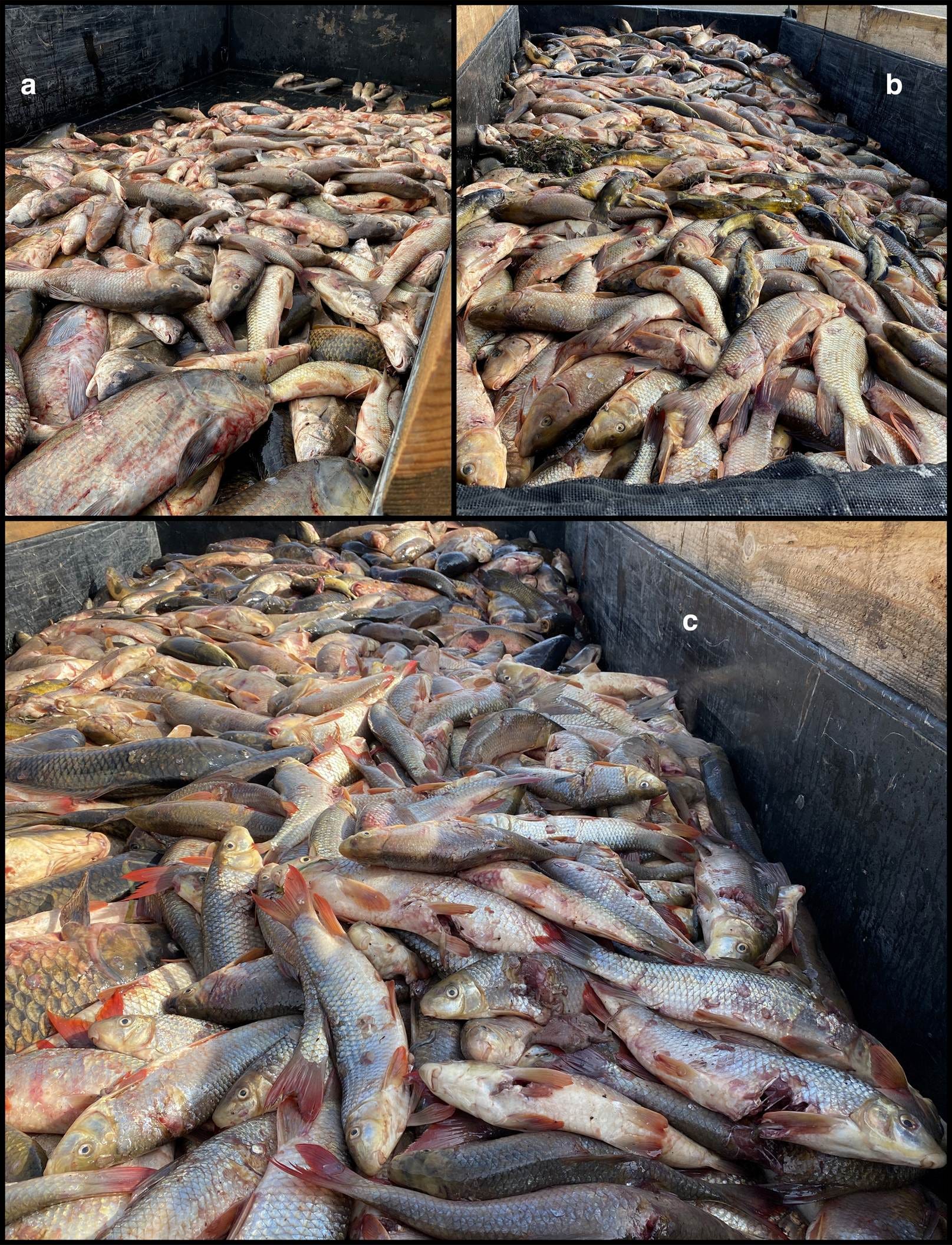
Fish in disposal bins killed by bowfishers in a single night during a 2021 tournament in Minnesota. At least 85 percent were natives, including bowfin, redhorse, bigmouth buffalo, freshwater drum, white suckers, and bullheads. Image provided by Environmental Biology of Fishes, 2023.
“As sports people, we all agree that we shouldn’t waste fish,” says Tyler Winter. “The gray area is when people start making up excuses for killing natives.” Among this fiction: Farmers need trash fish for fertilizer; if we don’t control gars and bowfins, they’ll kill all our gamefish; suckers eat gamefish eggs; cownose rays ravage clams and oysters... In the words of The Nature Conservancy’s Matt Miller, “A native-fish myth is born every minute.”
There’s not a shred of evidence that cownose rays have any measurable effect on Chesapeake Bay shellfish production. But that’s a fact bowfishers and watermen don’t want to know. “Eat a ray. Save the bay,” is their shibboleth.
Eating a cownose ray is apparently far more challenging than arrowing one. Not explaining how he was able to make the comparison, one bowfisher testified at a hearing that cownose ray tastes like urine. “I usually kill 800 a year,” commented another bowfisher on the Maryland Shooters Forum in reply to someone asking if cownose rays were edible. “You can have all you want to experiment with.” Yet another opined that they “taste like pure SHIZZ.” Such assessments call into question claims by some guides and bowfishers that cownose ray is delicious, as does the fact that all but a tiny fraction of the kill gets landfilled or ground for shark chum.
Guided bowfishing for cownose rays in Chesapeake Bay is a major industry. These fish, which can attain 40 pounds, are among the slowest reproducing of all marine vertebrates. Females don’t reach sexual maturity until they’re eight years old, then deliver no more than one pup a year.
This from Dr. Dean Grubbs of the Coastal and Marine Laboratory in St. Teresa, Florida: “There have always been lots of cownose rays in the bay. They’ve been a convenient scapegoat for the insults that we’ve brought on these shellfish populations... A good hunting tip might be, ‘Back up three boat lengths and shoot.’ Crossbows, widely used, make it even easier. Bowfishers want to kill them while they’re pregnant. They’re getting a two-for-one in their minds. I’m a hunter and a fisher, and I can tell you, it takes zero skill to kill a cownose ray.”
While bowfishing for cownose rays is still all the rage, tournaments -- formerly scheduled for April and May because that’s when females carry pups -- are currently banned. In 2019, responding to outrage by a coalition of anglers, environmentalists and animal-welfare groups, the Maryland legislature placed a moratorium on tournaments until the DNR hatches a cownose-ray management plan. At this writing, there’s still no plan.
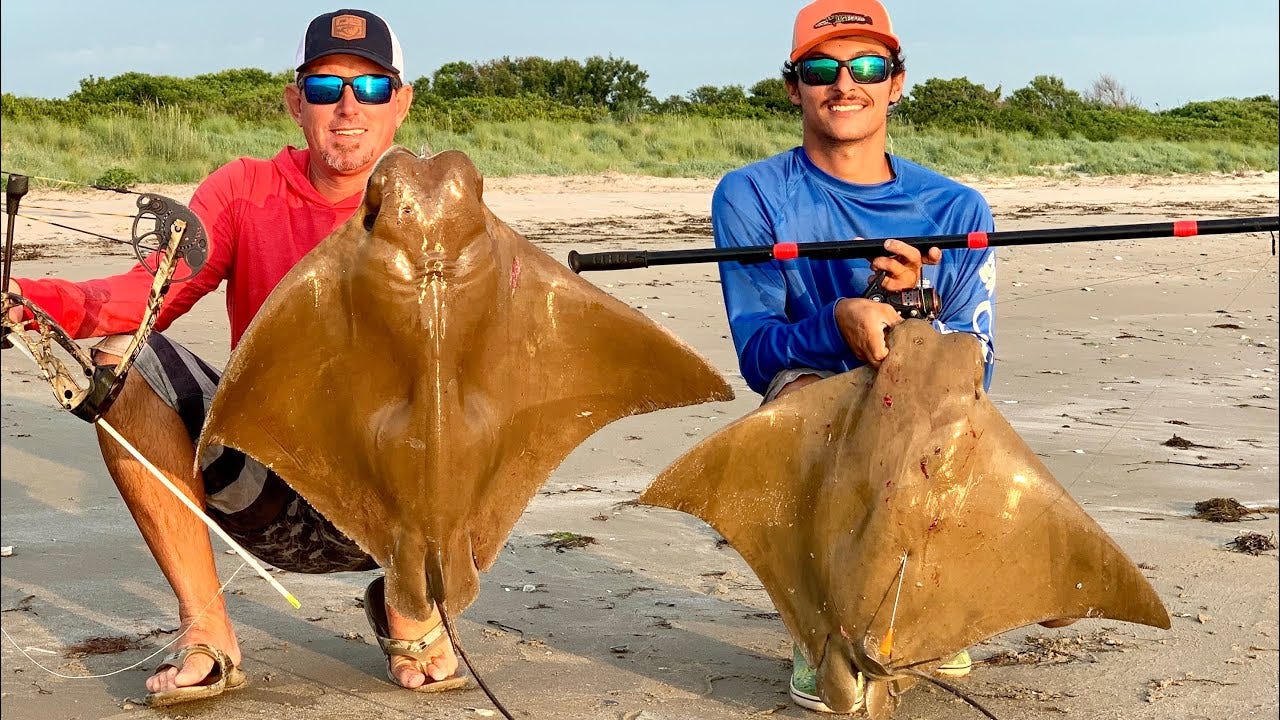
Bow-shot cownose Rays
Cownose ray flesh may be underappreciated save by sharks, but most freshwater “trash fish” make excellent table fare. There’s a big commercial market for buffalo and redhorse. Gars are “tasty,” according to University of Minnesota’s Solomon David. “But,” he says, “you can’t use a knife to clean them. You need tin snips or a hatchet. Bowfins are really good, too. You should fry them quickly after you kill them. Down south people target bowfins. They call them shupik.”
Bowfin fillets are “a bit soft,” reports fishery biologist Dr. Stephen Klobucar. “[But] they firm up in a frying pan. The lightly breaded end product rivals pike or walleye.”
And most nongame natives fight at least as well as the gamefish they’re wrongly accused of limiting. I know of at least a dozen flyfishers who target fallfish, and from my own experience, I can attest that fallfish take flies as well as trout and fight just as hard. They even look like trout. That’s why Thoreau called them “cousin trout.”
Klobucar offers this: “Bowfin viciously attack lures or bait and possess hook-bending strength... Their fight at any size can shame equivalent gamefish.”
Tyler Winter put our phone interview on hold while he hooked, landed and released a 17.5-inch silver redhorse, longest-lived of the redhorses. “They average a bit bigger than trout and fight just as well,” he told me. “It’s a great feeling to know that your grandchildren might catch a fish you release.” This one took a worm.
Winter sight-fishes for bigmouth buffalo with small flies presented with a flyrod or Japanese cane pole. “They graze,” he says. “So they won’t chase anything that moves. You need a drag-free and mend-free presentation. Each one I catch feels like an accomplishment.”
For gars, Winter uses minnows and extra-sharp hooks, setting “like I’m starting a lawnmower.”
“Alligator gars, which can grow to 300 pounds, “fight like tarpon,” says former Kansas governor Mike Hayden. For a fly, Hayden uses a piece of unbraided rope with no hook. He doesn’t set until the gar chews a bit, then its teeth tangle in the rope. With this method, you need extra-heavy leaders because if a fish breaks off, the rope prevents it from eating.
Quality of flesh and fighting ability notwithstanding, most native nongame fish are still management orphans. Shooting, say, ducks, geese, grouse or deer and leaving them to rot in the field is universally frowned upon, but the public appears singularly unmoved and unconcerned when bowfishers do the same with native fish.
Why do wanton-waste laws apply to native and non-native birds, mammals and fish classified as “game” but not to native fish classified as “trash,” “junk” or “rough”?
Maybe the answer is that fish are cold, slimy, unfeathered, unfurred and, for most Americans, unseen and unheard; and that, for these reasons, they generally don’t count as wildlife.
This piece appeared in the October 2025 edition of Gray’s Sporting Journal. To subscribe to Gray’s, go to: https://gry.secure.darwin.cx/I**A03J
Ted Williams wrote and edited for Gray’s from 1976 to 1989. His last Gray’s piece, “Poison Bullets,” appeared in September 2023.