

by Ted Williams
Raptors are being slaughtered by the thousands all across our nation by people who, for one reason or another, don’t like them. This is, of course, criminal activity--specifically a “Class B Misdemeanor” under the Migratory Bird Treaty Act of 1918 (MBTA).
The maximum fine, rarely levied, for dispatching a raptor that isn’t a bald or golden eagle or listed under the Endangered Species Act is a mere $15,000. And, though such a crime technically can land you in the slammer for six months, jail sentences are invariably suspended. The MBTA does have felony provisions if the United States can prove intent to sell, but the only intent of almost all raptor killers is to ditch the carcasses without being seen.
Another Class B Misdemeanor--according to our legal system, just as egregious as knocking off a peregrine falcon--is using a rendering of Smokey the Bear sans permission of the U.S. Forest Service. Every state and federal wildlife-law-enforcement official you engage on the subject will tell you this: The courts routinely deal with rapes, murders, smuggling, drug trafficking, and the like. No way are they going to take Class B Misdemeanors seriously.
So, unless the law is amended to allow U.S. attorneys to seek felony charges where appropriate, raptors are going to keep dying at rates unimaginable to most of the public.
********
If you doubt this, consider Operation High Roller. For once, the “high rollers” aren’t rich trophy hunters. In fact, they’re not even people; they’re birds.
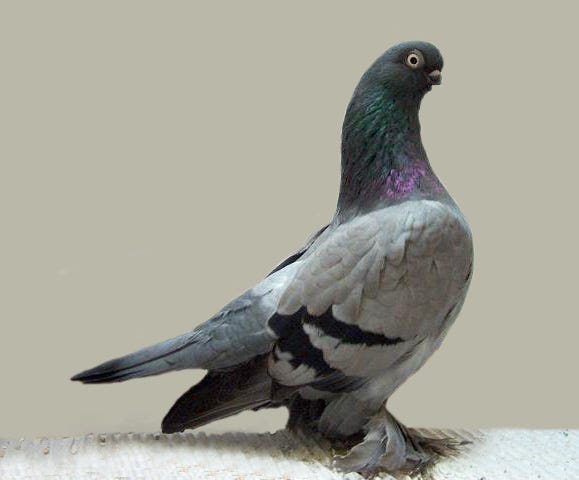
Roller pigeons, popularized in Birmingham, England, are bred for a genetic, seizure-like disorder that, in flight, causes them to simultaneously and uncontrollably throw up their wings, cock back their heads, and flip backwards, somersaulting repeatedly for hundreds of feet, not always recovering before union with terra firma converts them to carrion. Regulated by the National Birmingham Roller Club (NBRC), local clubs throughout the United States, Europe, Africa, Canada, and Mexico compete to see whose birds tumble best.
The hobby has attracted such high-profile participants as boxer Mike Tyson, whose former sex therapist is quoted by USA today as explaining that Iron Mike has a special connection with his rollers because he “doesn't take the normal tumbles like the average person [but] gets real high, then crashes.”
Despite such emotional benefits, roller flyers face a major frustration: When their pigeons start doing their thing, birds of prey see them for exactly what they are--genetic invalids ripe for plucking. As Tony Chavarria, owner and publisher of the Birmingham Roller Pigeon Discussion Board (ROLLER-PIGEON.COM) perceptively notes, “Many fanciers have been forced to leave the hobby/sport due to incessant attacks by these birds of prey which seem to focus on these roller pigeons as a primary food source (especially in the cities).”
Solution: Make the world safer for rollers by continuously killing raptors as they gravitate to roller lofts from all compass points, like stars to black holes.
_________________
Roller flyers face a major frustration: When their pigeons start doing their thing, birds of prey see them for exactly what they are--genetic invalids ripe for plucking.
_________________
Operation High Roller rendered this practice increasingly difficult and costly. Handing the case in California is Special Agent Ed Newcomer. Like all the special agents I’ve worked with over the years, Newcomer is highly educated, highly motivated, and horribly overextended. Before signing on with the service five years ago he had worked as a private attorney, assistant attorney general for Colorado, and assistant attorney general for Washington. He’s one of only 191 federal wildlife officers responsible for all states and territories, the lowest number since the mid-eighties. Such is the priority our society places on wildlife crime.
So “the thin green line,” as wildlife advocates call this small but ultra-elite force, employs resourceful strategies to make its presence known. In particular, it depends on the media to high-profile the tiny percentage of criminal cases it can bring to the Justice Department. Good press discourages wildlife crime, but always temporarily.
Newcomer got a complaint from a woman who had found a dead Cooper’s hawk and a wounded redtail in her yard in West Hills (just north of Los Angeles). When he went out to investigate, he learned that one of her neighbors was a “bird lover,” too. How so? Well, because he “raised racing pigeons.” Newcomer had a suspect, and he collected enough evidence to get the pigeon racer convicted on two MBTA counts.
It occurred to Newcomer that this behavior was probably widespread, but racing-pigeon clubs are tough to work undercover because there’s little interaction between members; the birds are just released at some distant location and their return times punched in. Rollers, on the other hand, orbit the member’s property; and competitions progress from house to house with much socializing at each.
Newcomer surfed the web, contacting club members, seeking advice, attending roller shows. Everyone wanted to be his mentor (and sell him birds at prices a beginner was unlikely to recognize as inflated).
“Within five minutes I heard people talking about killing hawks,” he told me. “One of the first things every person I spoke with said was how much he hated hawks and falcons and all the ways he killed them. In half an hour I realized this was going to be a huge case. There are about 250 roller club members in Los Angeles alone. It’s a worldwide hobby. I realized that if everyone I talked to is killing hawks, then the majority of roller pigeon club members in the U.S. are killing hawks.”
For more than a year Newcomer infiltrated three clubs in the Los Angeles area and made contact with about 60 members, all of whom also belonged to the NBRC. In all that time he encountered only one member who said he didn’t kill raptors. The lowest claim was 10 kills a year, the highest 52--this by NBRC national president, Juan Navarro of Los Angeles.
“If we conservatively say that 50 percent of the 250 roller members in LA are killing ten hawks a year, you’re talking 1,200 hawks in LA alone,” declares Newcomer. “That’s a huge impact as they migrate along the Pacific flyway.”
_________________
“One of the first things every person I spoke with said was how much he hated hawks and falcons and all the ways he killed them. In half an hour I realized this was going to be a huge case.”
_________________
Independently, Special Agent Dirk Hoy had started working roller clubs in Oregon, and the two coordinated their investigations. Quickly they learned that mass raptor executions by roller flyers weren’t confined to their states but were going down everywhere they looked--Washington, Texas, New Mexico, Wisconsin, Montana, and New York, for example. “One guy was bragging to me that a partner of his had killed 35 hawks in 45 days,” says Hoy. “When you start doing the math on that the numbers are just enormous.”
Five club members were charged in Oregon, one in Washington, eight in California, and 2 in Texas. Most pleaded guilty.
Some of the fines went to raptor restitution. For example, $29,500 of the fines collected in California were deposited in a bank account set up by the Los Angeles Audubon Society to protect, restore and rehabilitate raptors. “We’ll distribute the money in consultation with the Fish and Wildlife Service,” says the organization’s director, Garry George, who is still steaming about the violations and methods of execution. “These criminals killed peregrines, redtails, Cooper’s hawks, even kestrels. Kestrels don’t eat pigeons, but they didn’t know that.”
Another way the thin green line compensates for its size is by winning convictions on about 95 percent of its cases, a record maintained by, among other strategies, keeping tight-lipped about evidence. For example, when the law enforcement division charged roller flyers, it didn’t tell anyone there’d been undercover work or that agents had audio and video evidence that plainly showed that the defendants had been killing raptors. Agents whom the defendants hadn’t seen (or, in at least one case, didn’t recognize because the formerly bearded agent was clean shaven and wearing federal raid gear) merely asked if they’d killed any raptors. In virtually every case the defendants said they had not. So during plea bargaining U.S. attorneys informed them that if they fought the MBTA Class B Misdemeanor charges, the prosecution would add the felony charge of lying to federal officers.
Because the MBTA has such weak penalties, special agents sometimes seek collateral charges where crimes are particularly outrageous. For instance, of the seven successful roller cases Newcomer has made so far in California, he has referred three to the Los Angeles district attorney--one for negligent discharge of a firearm (a state felony) and two for state-felony animal-cruelty.
NBRC president Juan Navarro who, according to court documents, told Newcomer that, after he catches hawks at the rate of about one per week (in Larsen live traps baited with live pigeons and, at the time, openly sold at roller shows), he “pummels them with a stick” and that it is “great thing…you’ll see, you get a lot of frustration out.”
“We just didn’t have the manpower or time to go after everybody,” says Newcomer. “And at some point you’ve got to ask, ‘Gee, how long am I going to let hawks get killed.’ So I decided to target the club president and the people who were most brazen about this. It was sickening to have to hang out with these guys and listen to them.”
I saw what Newcomer meant from the court documents and the internet roller chatter I’d collected (now mostly deleted online). For example, according to the search-warrant affidavit, Darik McGhee of San Bernardino, California, proudly informed Newcomer that he had filled a five-gallon bucket with talons from hawks he’d killed.
According to the same document, Rayvon Hall of Rialto, California, presented Newcomer with severed Cooper’s hawk talons and explained that he made chlorine gas with bleach and ammonia and used it to kill trapped hawks by spraying it in their mouths and eyes.
But the preferred method of execution, on which Newcomer, Hoy, and their fellow agents were carefully instructed by their eager tutors, was to discretely and silently pump air-rifle rounds into the trapped hawks’ heads and chests.
_________________
NBRC president Juan Navarro who, according to court documents, told Newcomer that, after he catches hawks at the rate of about one per week (in Larsen live traps baited with live pigeons and, at the time, openly sold at roller shows), he “pummels them with a stick” and that it is “great thing…you’ll see, you get a lot of frustration out.”
_________________
The Audubon Society of Portland rescued four peregrine falcon eggs from a bridge under construction, rappelling down to the nest. The society hatched the eggs and raised the chicks. Clark Public Utilities donated a crew and supplies to build a release tower on Ridgefield National Wildlife Refuge, and a volunteer, Ken Barron, lived on the refuge with the young falcons for six weeks as they acclimated to the wild. The four fledglings--much in evidence in and around the refuge--won the hearts of the public and the press. But one day they disappeared, never to be seen again.
According to Ivan Hanchett of Hillsboro, Oregon, a fellow roller-pigeon defender shot them. Herewith, from the Birmingham Roller Pigeon Discussion Board, Hanchett’s take on the incident, posted shortly before he was convicted for hawk killing and meriting the additional charge of cruelty to language: “Well low and behold just across the street from the wildlife refuge lives a roller flyer and when the young became airbourne they found alot of led in the air space across the street where the rollers were flying LOL!! I laughed and laughed when I heard this story because of all the pain staking measures they took to get these birds to adolescence and than to have somone take them out simply was bliss!!” (Special Agent Hoy reports that when he was working undercover Hanchett bragged to him that he shot many hawks but instructed him on quieter, more creative methods: 1. “angling” for them with live feeder mice rigged with fish hooks; and 2. catching them in Larsen traps, then suffocating them in plastic bags.)
Other commentary cut and pasted from the Birmingham Roller Pigeon Discussion Board:
Centralvalleylofts: “Just put some draino on some of your weaker birds and let them take them and bye bye baby. Make sure you rub it on the back of their necks.”
Steve uk: “Shaun u need a larson trap [for raptors].”
Shaun: “Steve, I very recently acquired one and it ain’t working! Any hints?”
Steve uk: “It will work just keep tryin, the hen will start takin greater risks soon as she will be desperate to put weight on before laying.”
Shaun: “Put weight on? The fat, ugly, brown bastard is still probably digesting a dozen of my rollers! Can’t I just let off a homemade bomb at the bottom of my garden.”
J. Star: “I sit and wait for him behind a big bush and within a half hour he in on top of the Avery thinking he is going to catch a bird and soon he is picked off…. You will not see him again until another one comes to take his territory, then you repeat the process.”
Spider: “I use a 12 ga shotgun with led #5 shot…. Sometimes I get 2-3 friends with 12 gages and we have a ball seeing who can get led in these loft destroyers…. Good luck and good hunting.”
Rollerman 132: “What we need to do is hire a lawyer, and bring a class auction law suit against the department of U.S Fish and wild life for contributing to the destruction of personal property…. My birds are worth at lest a hundred each, I want compensation for each bird those hawks eat.”
_________________
“Just put some draino on some of your weaker birds and let them take them and bye bye baby. Make sure you rub it on the back of their necks.”
_________________
The NBRC has responded to Operation High Roller with an official press release alleging that Cooper’s hawks have proliferated to the point of pestilence and castigating the Fish and Wildlife Service for: 1: stubbornly refusing to “relocate” them to areas where they won’t eat roller pigeons; and 2. making “inappropriate and grossly exaggerated comments [that] which sought to tar thousands of roller fanciers by reason of the unfortunate allegations against less than a dozen individuals.”
But it’s clear that raptor killing in the roller-flyer community isn’t just the work of a few bad apples. Most of the barrel is fermented mash. After all, of the roughly 60 NBRC members Newcomer worked while undercover 59 said they killed hawks. It’s part of the culture.
Still, as NBRC members tirelessly point out, there are ethical roller flyers. After searching for a month I was able to find one (at least a former one)--Will Brown of Stanardsville, Virginia. He offers this: “One of the reasons I stopped flying rollers is that they’re hawk food. They mimic sick or injured birds, the kind hawks are supposed to eat. I’m not going to fight nature. So I switched to different pigeons--thief powders. They don’t flop around in the sky and attract hawks…. I was pleased to hear about this sting. Roller flyers are quite belligerent. If you mention that hawks are part of nature and maybe we should work with nature, you’re quickly ostracized…. I still lose a few birds, and I accept it as part of what happens when you let birds fly in the real world. The real world has raptors.”
********
Unfortunately, there is nothing aberrant about the roller flyers cult. Similar jihads are being waged by other groups who find themselves inconvenienced by migratory birds.
In fact, MBTA flouting is an American tradition. On a stakeout with Special Agent Roger Gephart in California’s San Joaquin Valley, I watched a fish farmer shoot great egrets. Several days later I interviewed Marvin Carpenter at his Merced, California goldfish farm. He clamed to have been ruined by birds and feds. “All fish farmers shoot birds,” he explained, without much exaggeration from what I’ve been able to learn. “Fish farmers are producers, and the government is knocking us out. The environmentalists have [the government] right by the nose.”
Carpenter was especially bitter about the way special agents showed up uninvited and started digging up his property with a backhoe, thereby unearthing some 700 migratory-bird carcasses. Total kill was estimated at 20,000. “If it flies it dies,” was the battle cry of Carpenter’s Goldfish Farm. All large birds, even non-fish eaters such as avocets, gallinules, willets, stilts and hawks, were splashed as soon as they violated company air space. Cyanide-coated goldfish accounted for as many as 200 herons per day. Three hundred beaver traps constantly splintered the legs of wading birds. Carpenter got a 13-month jail sentence and a $34,000 fine; but this was mostly for the felony conviction of lying to federal agents.
Because the MBTA carries such weak penalties, nothing much has changed since Carpenter was making the world safer for goldfish, except that for a while fish farmers shot fewer birds. Now roller flyers will be careful to obey the MBTA, or at least not get caught violating it, for maybe another year. “These things are always cyclic,” says Special Agent Hoy. “They’ll get comfortable again; some will start violating again; and we’ll be there.” Even so, the violators won’t have a whole lot to worry about unless the law is amended to provide for felony charges at the discretion of the U.S. attorney.
********
In Oregon one defense attorney told the judge that $10,000 was too much and that $7,500 would be fair for his client--Ivan Hanchett, the creative hawk killer who had “laughed and laughed” when he heard about the executions of the four peregrine fledglings. U.S. District Judge Ancer Hagerty didn’t agree; he dropped Hanchett’s fine to $4,000. One of the other two Oregon roller flyers convicted at this writing--Peter Kaufman of Portland--was also assessed $4,000. Mitch Reed of Mount Angel paid $5,000.
These and defendants from other states who pled out were placed on probation and required to do community service, but there was no jail time. So, with the possible exception of NBRC president Juan Navarro, convicted on 14 MBTA counts and fined $25,000, the raptor killers were bothered only by a business-as-usual expense, no more painful than purchasing a shotgun, a pellet gun, ammo, and a few Larsen traps.
-30-
Ted Williams writes rare books as well as articles for low-paying publications.